
Introduction
Water is essential for life, but not all water is the same. While most people focus on whether water looks clean or tastes good, an important factor often goes unnoticed — TDS (Total Dissolved Solids).
TDS plays a crucial role in determining the quality, taste, and safety of drinking water. Whether you are using tap water, RO purified water, or mineral water, understanding TDS can help you make better health decisions.
In this detailed guide, we will explain everything you need to know about TDS in water, including what it is, how it affects your health, and what the ideal TDS level should be.
What is TDS in Water?
TDS stands for Total Dissolved Solids, which refers to the total amount of dissolved substances present in water.
These dissolved solids include:
Minerals like calcium, magnesium, potassium
Salts such as sodium chloride
Metals like iron, copper
Organic matter
TDS is measured in parts per million (ppm) or milligrams per liter (mg/L).
In simple terms, TDS tells you how pure or contaminated your water is.
What Does TDS Include?
TDS is made up of two types of substances:
1. Inorganic Salts
These are naturally occurring minerals:
Calcium
Magnesium
Sodium
Potassium
Bicarbonates
Chlorides
2. Organic Matter
These may include:
Decomposed plants
Industrial waste
Sewage contaminants
The higher the TDS, the more dissolved substances are present in water.
Why is TDS Important in Drinking Water?
TDS directly impacts:
1. Taste of Water
Low TDS → Flat or tasteless water
Balanced TDS → Fresh and pleasant taste
High TDS → Bitter or salty taste
2. Health Impact
Some minerals are essential for the body
Excess contaminants can be harmful
3. Water Quality
Indicates whether water is safe or needs purification
That’s why TDS is a key factor in water quality testing.
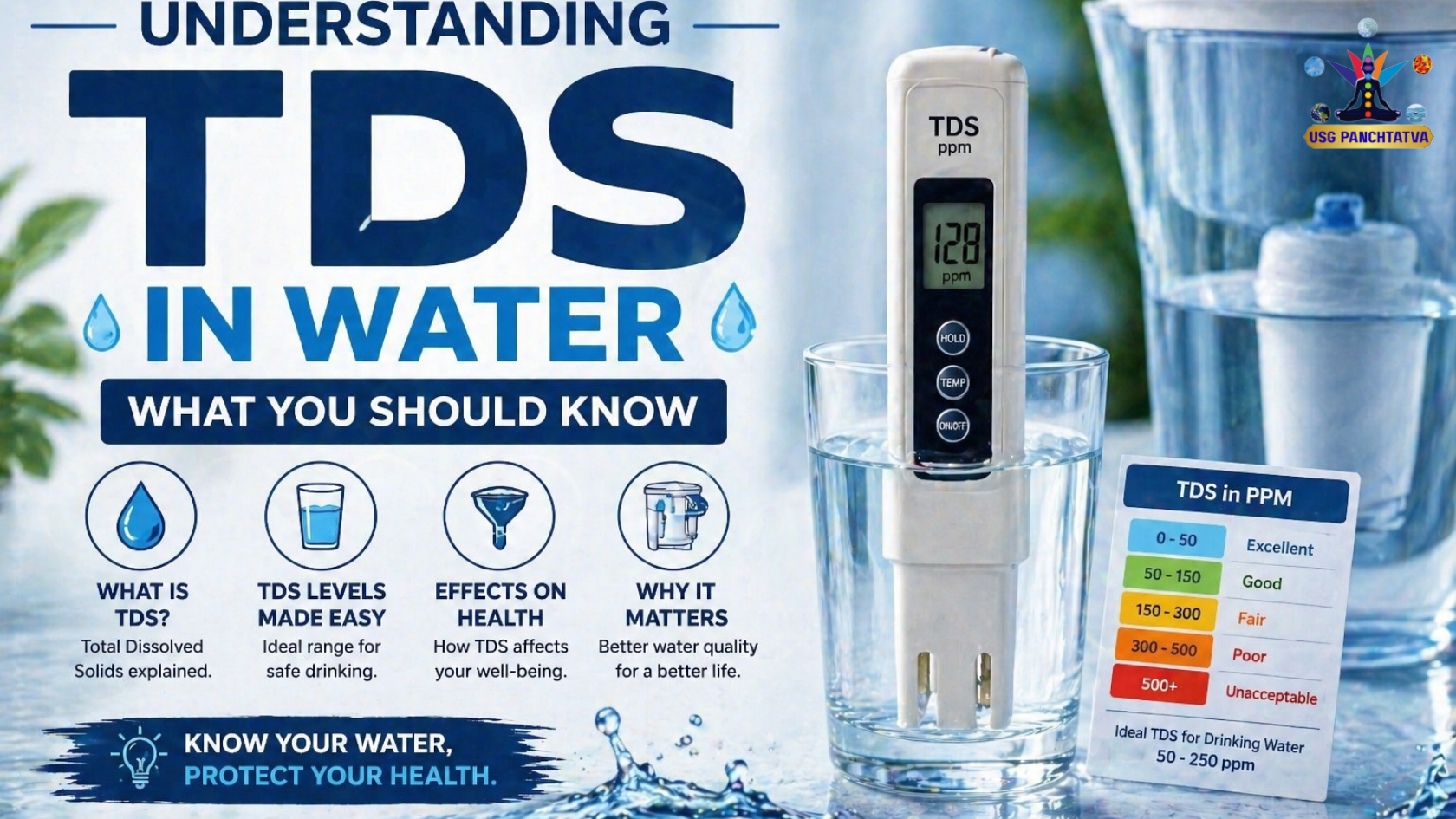
Ideal TDS Level for Drinking Water
According to guidelines (like BIS & WHO recommendations):
| TDS Level (ppm) | Water Quality |
|---|---|
| 0 – 50 | Very low (not ideal) |
| 50 – 150 | Excellent |
| 150 – 300 | Good |
| 300 – 500 | Acceptable |
| 500 – 900 | Poor |
| 900+ | Unsafe |
Ideal TDS range: 50 – 300 ppm
Is Low TDS Water Good?
Not always.
Water with very low TDS (like RO water below 50 ppm):
Lacks essential minerals
May taste flat
Can cause mineral deficiency if consumed long-term
That’s why many modern RO systems include a mineralizer to balance TDS.
Is High TDS Water Harmful?
High TDS water (above 500 ppm) may:
Contain harmful chemicals
Cause digestive issues
Lead to scaling in pipes and appliances
Taste salty or bitter
Extremely high TDS can indicate contamination.
Sources of TDS in Water
TDS in water comes from both natural and human-made sources:
Natural Sources
Rocks and soil minerals
Rivers and groundwater
Natural salts
Human Activities
Industrial waste
Agricultural runoff (fertilizers, pesticides)
Sewage discharge
This is why groundwater often has higher TDS than rainwater.
How to Measure TDS in Water?
You can easily measure TDS using a TDS meter.
Steps:
Turn on the meter
Dip it into water
Wait for reading
Check ppm level
It’s quick, affordable, and useful for home use.
TDS vs Water Purity – The Truth
Many people think:
Low TDS = Pure Water
But that’s not always correct.
TDS measures quantity, not quality
Harmful substances may exist even at low TDS
Healthy minerals also increase TDS
So, TDS alone cannot determine water safety.
How to Reduce High TDS in Water?
If your water has high TDS, you can use:
1. RO (Reverse Osmosis) Purifier
Removes up to 90–95% dissolved solids
Best for high TDS water
2. Distillation
Removes almost all impurities
Not commonly used for daily drinking
3. Deionization
Removes charged particles
Mostly used in labs
RO is the most practical solution for households.
Should You Always Reduce TDS?
No.
If your water TDS is already in the ideal range (50–300 ppm), no need for heavy purification.
Over-purifying water can:
Remove beneficial minerals
Affect taste
Reduce health benefits
TDS and Health – What You Should Know
Benefits of Balanced TDS Water
Provides essential minerals
Supports bone and muscle health
Improves taste and hydration
Risks of Imbalanced TDS
High TDS → Toxic exposure risk
Low TDS → Mineral deficiency
Balance is the key.
Common Myths About TDS
Myth 1: Zero TDS Water is Best
Wrong — it lacks minerals
Myth 2: High TDS Means Unsafe Water
Not always — depends on what is dissolved
Myth 3: TDS Meter Shows Purity
It only shows dissolved solids, not bacteria
TDS in Different Types of Water
| Water Type | Typical TDS |
|---|---|
| RO Water | 20 – 100 ppm |
| Tap Water | 100 – 500 ppm |
| Groundwater | 300 – 1000 ppm |
| Mineral Water | 150 – 300 ppm |
Tips to Maintain Healthy TDS Levels
Test your water regularly
Use RO only if needed
Prefer mineral-balanced water
Avoid extremely low TDS water
Choose good quality filters
Why TDS Matters for Your Family
For families, especially children and elderly:
Proper mineral intake is important
Balanced water supports immunity
Safe water prevents diseases
Clean water is not just clear water — it must be balanced.
Conclusion
Understanding TDS in water is essential for making informed decisions about your drinking water.
The key takeaway:
TDS is important but not the only factor
Ideal range is 50–300 ppm
Both very low and very high TDS can be harmful
Use purification wisely
Choosing the right water ensures better health, better hydration, and better life.