
Introduction
Water is one of the most essential elements for survival, yet many people do not drink enough of it daily. Dehydration occurs when your body loses more fluids than it takes in, affecting normal body functions.
The problem is — most people don’t recognize dehydration early.
By the time you feel extremely thirsty, your body is already mildly dehydrated.
In this blog, we will cover the warning signs of dehydration, causes, health risks, and how to stay properly hydrated, so you can protect your health effectively.
What is Dehydration?
Dehydration is a condition where your body lacks sufficient water to perform essential functions.
Your body uses water for:
Regulating temperature
Supporting digestion
Maintaining blood circulation
Removing toxins
Even a small drop in hydration can impact your energy and health.
Common Causes of Dehydration
Understanding causes helps in prevention:
1. Not Drinking Enough Water
The most common reason.
2. Excessive Sweating
Hot weather
Exercise
Fever
3. Illness
Vomiting
Diarrhea
Fever
4. Caffeine & Alcohol
These increase fluid loss.
5. Certain Medications
Some medicines act as diuretics.
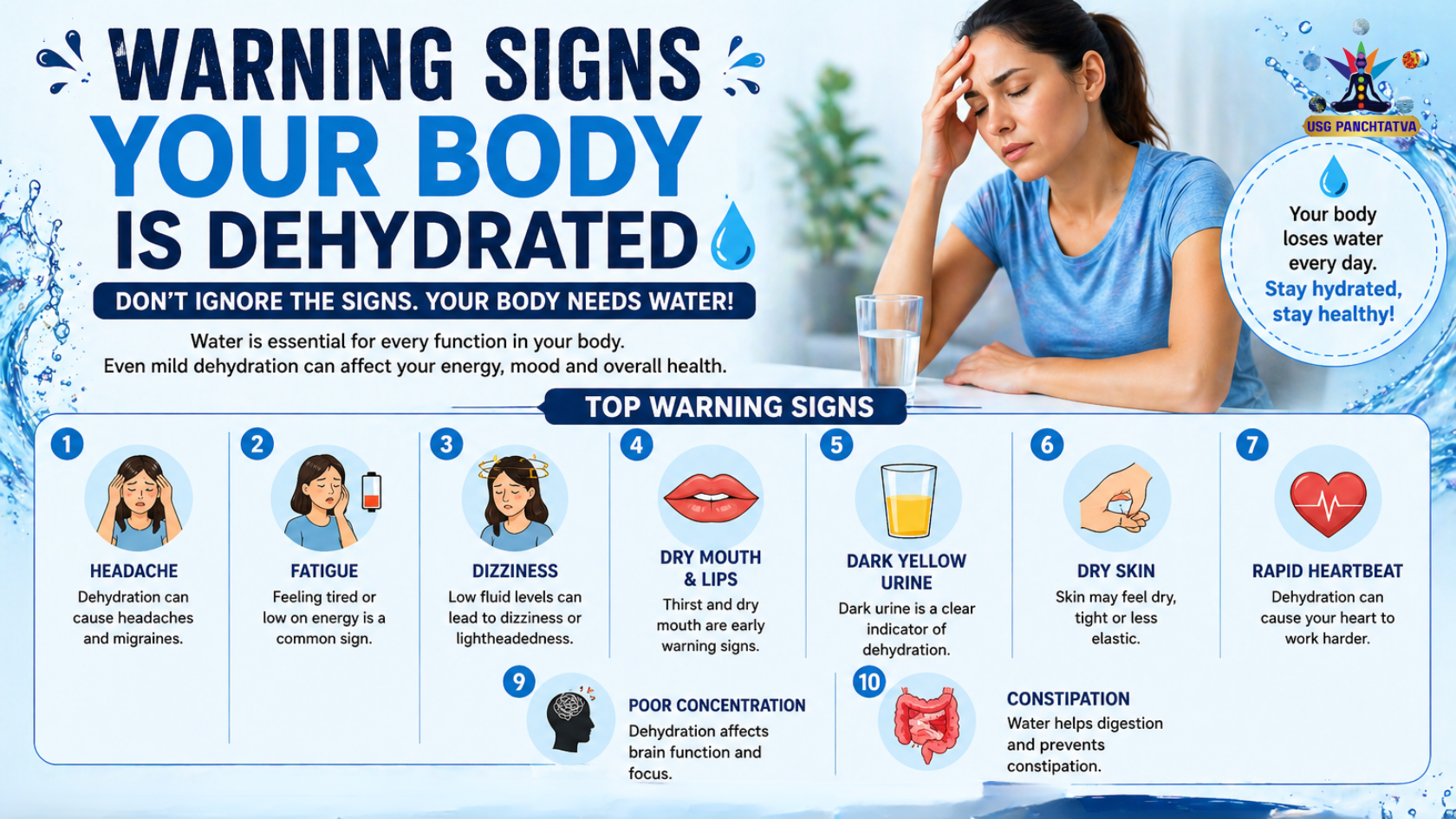
Top Warning Signs Your Body Is Dehydrated
Let’s look at the most important symptoms you should never ignore:
1. Constant Thirst
This is the first and most obvious sign.
If you feel thirsty frequently, your body is already low on fluids.
2. Dry Mouth and Lips
Sticky or dry feeling in mouth
Cracked lips
Indicates lack of moisture in the body.
3. Dark Yellow Urine
Urine color is one of the best indicators:
Light yellow → Well hydrated
Dark yellow → Dehydrated
Always monitor your urine color.
4. Fatigue and Weakness
Low water levels can:
Reduce blood circulation
Lower oxygen supply
Result: Feeling tired without reason
5. Headaches
Dehydration can cause:
Mild to severe headaches
Migraine triggers
Brain temporarily shrinks due to fluid loss.
6. Dizziness or Lightheadedness
Feeling faint
Loss of balance
Often due to low blood pressure from dehydration.
7. Dry Skin
Your skin may:
Feel rough
Lose elasticity
Appear dull
Hydration is essential for skin health.
8. Muscle Cramps
Lack of fluids affects muscle function.
Leads to:
Painful cramps
Reduced performance
9. Rapid Heartbeat
Dehydration can force your heart to work harder.
Symptoms:
Increased heart rate
Palpitations
10. Reduced Urination
Urinating less than usual
Strong smell
Indicates low fluid levels.
11. Bad Breath
Dry mouth reduces saliva.
This allows bacteria to grow, causing bad breath.
12. Confusion or Poor Focus
Severe dehydration affects brain function.
Leads to:
Difficulty concentrating
Memory issues
Severe Dehydration Symptoms (Emergency)
Seek medical help if you notice:
Extreme thirst
No urination
Sunken eyes
Rapid breathing
Confusion or unconsciousness
How Dehydration Affects Your Body
1. Brain
Reduced concentration
Mood changes
2. Kidneys
Increased risk of kidney stones
Poor toxin removal
3. Heart
Increased strain
Irregular heartbeat
4. Digestive System
Constipation
Poor digestion
Who is at Higher Risk?
Children
Elderly people
Athletes
People in hot climates
Individuals with chronic illness
How Much Water Do You Need Daily?
General guideline:
Men: 3–4 liters/day
Women: 2–3 liters/day
But depends on:
Weather
Activity level
Body weight
Best Ways to Stay Hydrated
1. Drink Water Regularly
Don’t wait for thirst.
2. Eat Water-Rich Foods
Watermelon
Cucumber
Oranges
3. Avoid Excess Caffeine
Limit tea, coffee, and energy drinks.
4. Carry a Water Bottle
Helps track intake.
5. Use Electrolytes When Needed
Especially during illness or heavy sweating.
Hydration Tips for Different Situations
During Summer
Increase water intake
Avoid direct sun
During Exercise
Drink before, during, after workout
During Illness
Take fluids frequently
Common Myths About Dehydration
Myth 1: Thirst Means You Need Water
By then, you’re already dehydrated
Myth 2: Only Water Matters
Food also contributes to hydration
Myth 3: More Water is Always Better
Overhydration can also be harmful
Signs You Are Well Hydrated
✔ Clear or light yellow urine
✔ Good energy levels
✔ Healthy skin
✔ Normal urination
When to See a Doctor
Consult a doctor if:
Symptoms persist
Severe dehydration signs appear
Child or elderly shows symptoms
Conclusion
Dehydration is common but often ignored. Recognizing early warning signs can prevent serious health problems.
Key takeaway:
Don’t wait for thirst
Watch your body signals
Stay consistently hydrated