
What is pH in Drinking Water and Why It Matters
When we talk about drinking water quality, most people think about purity, TDS, or filtration. However, one of the most important yet misunderstood factors is the pH level of water.
pH determines whether your water is acidic, neutral, or alkaline. It directly affects not only the taste of water but also its impact on your health, digestion, hydration, and even long-term wellness.
Understanding pH in drinking water is essential if you want to ensure that the water you consume is not just clean but also beneficial for your body.
What is pH in Drinking Water
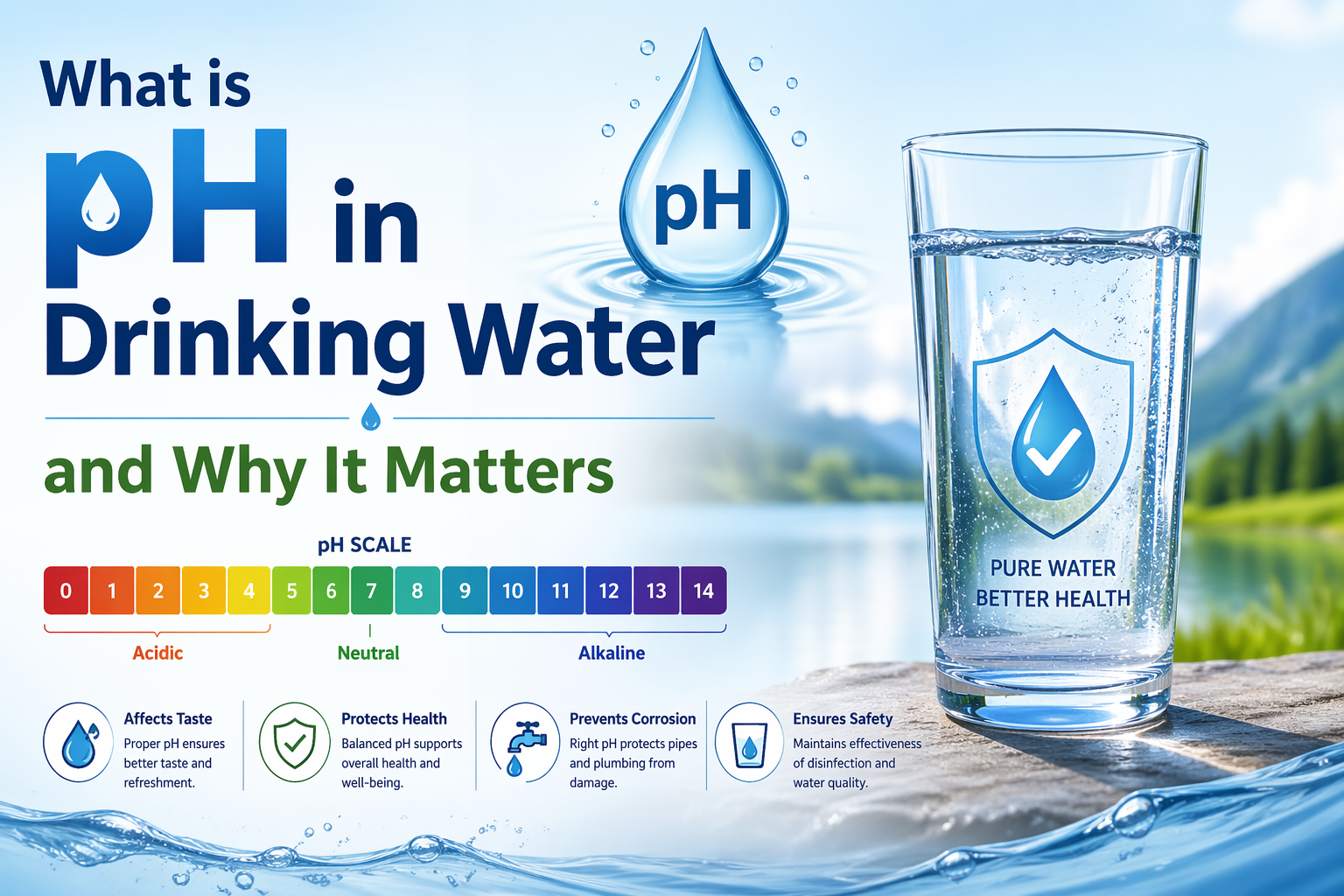
pH stands for “potential of hydrogen.” It measures the concentration of hydrogen ions in water and indicates how acidic or alkaline the water is.
0 \leq pH \leq 14
pH 7 = Neutral
pH below 7 = Acidic
pH above 7 = Alkaline
This scale is logarithmic, which means each step represents a tenfold difference in acidity or alkalinity.
For example, water with pH 6 is ten times more acidic than water with pH 7.
Ideal pH Level for Drinking Water
The World Health Organization (WHO) recommends that drinking water should have a pH between 6.5 and 8.5.
However, for optimal health and hydration:
pH 7 → Neutral (basic safe level)
pH 7.5–8.5 → Slightly alkaline (preferred)
Water outside this range may not be harmful immediately but can cause long-term issues.
Why pH in Drinking Water Matters
The pH level of water affects multiple aspects of your health and daily life.
1. Impact on Taste and Quality
Water with different pH levels tastes different:
Acidic water → Sour or metallic taste
Alkaline water → Smooth and slightly sweet
Taste is often the first indicator of water quality.
2. Effect on Digestion
Drinking water with balanced pH supports proper digestion.
Acidic water may increase acidity and discomfort
Slightly alkaline water may help neutralize excess stomach acid
This is why many people prefer alkaline water for digestive health.
3. Influence on Hydration
Water with balanced pH and minerals is absorbed more efficiently by the body.
Proper hydration supports:
Energy levels
Brain function
Muscle performance
Poor-quality water may not hydrate effectively.
4. Long-Term Health Impact
Regular consumption of highly acidic or highly alkaline water can affect the body’s natural balance.
Possible issues include:
Mineral imbalance
Digestive discomfort
Reduced nutrient absorption
Maintaining balanced pH water helps support long-term health.
Acidic Water vs Alkaline Water
Understanding the difference is important for making the right choice.
Acidic Water (pH below 7)
Causes:
Industrial pollution
Acid rain
High dissolved carbon dioxide
Effects:
Corrosion of pipes
Metallic taste
Potential digestive irritation
Alkaline Water (pH above 7)
Sources:
Natural mineral-rich water
Water ionizers
Benefits:
Better hydration
May help balance acidity
Contains essential minerals
Role of Minerals in pH Balance
Minerals play a key role in determining water pH.
Calcium
Raises pH and supports bone health.
Magnesium
Improves hydration and supports metabolism.
Potassium
Maintains electrolyte balance.
Water that contains these minerals tends to be slightly alkaline and more beneficial.
How pH Affects Water Safety
While pH alone does not determine safety, it affects how contaminants behave.
Low pH → Increases metal leaching from pipes
High pH → Can reduce effectiveness of disinfection
Balanced pH ensures safer and more stable water quality.
How to Test pH of Drinking Water
You can check water pH using:
pH test strips
Digital pH meters
Laboratory testing
Regular testing helps ensure safe drinking water.
How Water Purifiers Affect pH
Different purification systems impact pH differently:
RO Systems
Reduce TDS
May lower pH slightly
Remove minerals
Alkaline Systems
Increase pH
Add essential minerals
UV/UF Systems
Do not significantly change pH
Focus on removing microbes
How to Maintain Ideal pH in Drinking Water
To ensure balanced pH:
Use advanced water purifiers with mineral cartridges
Avoid storing water in low-quality containers
Regularly maintain purification systems
Test water quality periodically
Common Myths About pH in Water
Myth: Higher pH is always better
Reality: Extremely high pH can be harmful
Myth: pH alone determines water quality
Reality: TDS, contaminants, and minerals also matter
Myth: Bottled water always has ideal pH
Reality: Quality varies by brand
Frequently Asked Questions
What is the best pH for drinking water
Between 6.5 and 8.5 is considered safe.
Is alkaline water better than normal water
Slightly alkaline water may provide additional benefits.
Can acidic water harm health
Long-term consumption may cause discomfort and imbalance.
Does RO water change pH
Yes, it may lower pH due to mineral removal.
Conclusion
pH in drinking water is a critical factor that affects not only taste but also health, hydration, and long-term wellness.
While purity is important, maintaining a balanced pH ensures that water supports your body effectively. Slightly alkaline, mineral-rich water is often considered ideal for daily consumption.
Understanding and maintaining proper water pH is one of the simplest yet most powerful steps you can take toward better health.